VIII Iberoamerican Workshop in Orthogonal Polynomials and Applications
Dedicated to the 75th anniversary of Francisco (Paco) Marcellán
Presentation
The Iberoamerican workshops in orthogonal polynomials were created to encourage research in the fields of approximation theory, special functions, orthogonal polynomials and applications among graduate and nongraduate students as well as young researchers from Latin America, Spain and Portugal.
The previous editions were held in Bogotá, Colombia (2011), Colima, Mexico (2012), São José do Rio Preto, Brazil (2013), Bogotá, Colombia (2014), Mexico City, Mexico (2015), Uberaba, Brazil (2017) and Leganés, Spain (2018).
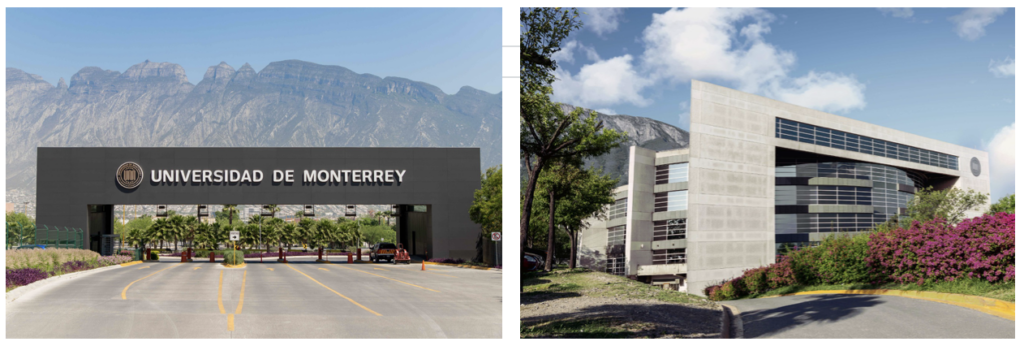
The eighth edition will be held in Monterrey, México, from December 8-11, 2026 at the Universidad de Monterrey. This edition will be dedicated to the 75th anniversary of Prof. Francisco (Paco) Marcellán.
The workshop will consist of two mini-courses, complemented by a limited number of invited lectures and contributed talks. The mini-courses will provide participants with an opportunity to explore selected topics in greater depth, while the invited lectures will present recent developments and current research in the field. Contributed talks will offer participants, particularly young researchers and graduate students, the opportunity to present their own research and exchange ideas with other participants.
Mini-Courses
Mini-course 1: Data science with SVMs and orthogonal polynomial kernels (Nuria Torrado, Universidad Autónoma de Madrid)
Can a nonlinear classifier be flexible while, at the same time, revealing how it constructs its decisions? In this course, we will study binary classification with support vector machines (SVMs) from a statistical perspective, connecting risk, regularization, margin geometry, and kernel methods. Following an introduction to the classical theory of SVMs, we will construct kernels from families of orthogonal polynomials and analyze how the orthogonality measure, truncation, and tensor structure determine the classifier’s feature space.
The course will show how Christoffel–Darboux kernels provide explicit and structured polynomial representations, and how to carefully distinguish between population orthogonality, sample behavior, and numerical stability. The final session will focus on opening the black box from within through a post-training methodology that exactly decomposes the RKHS norm of an SVM according to polynomial degree, interaction order, and marginal or pairwise contributions. This methodology is introduced in the recent preprint by Soto-Larrosa, Torrado, and Huertas (2026), which makes it possible to recover the orthogonal coefficients directly from the trained SVM, without surrogate models or retraining.
The course will bring together mathematics, engineering, data science, and explainable artificial intelligence, while highlighting potential research directions for a doctoral thesis.
Mini-course 2: Python Implementation of Machine Learning Algorithms Based on Orthogonal Polynomials (Luis Carlos Padierna, Universidad de Guanajuato)
This workshop is both theoretical and practical. Its aim is to enable participants to understand and implement machine learning algorithms that incorporate orthogonal polynomials. To this end, we will introduce the field of machine learning, placing kernel methods in context and discussing the types of learning problems they address. The formulation of kernel C-SVM and kernel PCA methods will be presented in order to understand their underlying mechanisms and the role of the kernel function.
Both methods will be implemented in Python using scikit-learn, and we will show how to incorporate custom kernels based on orthogonal polynomials, such as the family of Gegenbauer kernels (10.1016/j.patcog.2018.07.010). Finally, we will present successful applications to real-world problems, practical experiences with the implementations, ongoing projects, and open questions in this line of research.
Program
Program will be available soon.
Registration
We invite all interested participants to register for the workshop and, if they wish, to submit a contributed talk. Please complete the registration form below, providing the requested information and, if applicable, the title and a brief description of your proposed talk.
Click here to register.
Practical information
Monterrey can be easily reached by air through Monterrey International Airport (MTY). For accommodation, there are plenty of options near Universidad de Monterrey (UDEM) but we recommend Hotel CHN Monterrey Centro, which offers a special rate for participants of the workshop through UDEM. Participants interested in this rate are encouraged to contact the hotel and mention the UDEM workshop when making their reservation.
Organizing committee
Herbert Dueñas (Universidad Nacional de Colombia, Colombia)
Lino G. Garza (Universidad de Monterrey, México)
Luis E. Garza (Universidad de Colima, México)
Edmundo Huertas (Universidad de Alcalá, España)